

Britain Needs More Than Tax Revenue: Why Economic Growth Matters
The 2026 Budget has been delivered, bringing renewed attention to taxation, public spending and the future direction of the UK economy. But beyond the political debate, there is a bigger question worth considering: how do we create more wealth in Britain, rather than simply deciding how to distribute or tax the wealth already being generated?
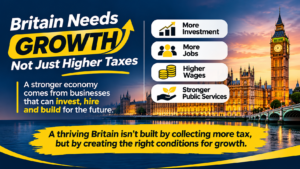
Tax revenue is essential for funding public services and supporting the country. However, a sustainable economy also needs businesses that can invest, entrepreneurs willing to take risks, employers creating jobs and individuals with the confidence to build for the future.
For the UK to strengthen its economy, the focus must extend beyond raising revenue. It must also be about creating the conditions for long-term growth.
1. Economic Growth Must Be Part of the Budget Conversation
Government budgets are often judged by the amount of money they raise, the level of public spending and the tax changes they introduce. These are important considerations, but they do not tell the whole story.
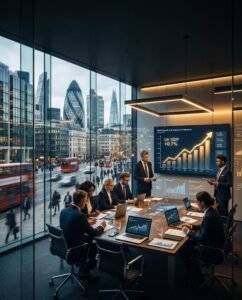
Economic growth matters because it expands the overall size of the economy. When businesses increase production, employ more people and generate higher profits, economic activity can create additional tax revenue without relying solely on higher tax rates.
The latest available ONS figures show that UK GDP grew by 0.7% in the three months to August 2026. However, monthly growth was just 0.1% in August, illustrating why headline figures need to be considered alongside the wider economic picture.
The challenge is not simply to achieve growth in one quarter. It is to create the conditions for consistent, sustainable growth over several years.
Image suggestion: A professional graphic showing the UK economy, a rising GDP chart and business activity, helping readers understand the relationship between economic growth and government revenue.
2. Small Businesses and Entrepreneurs Are Central to the Economy
A significant part of Britain’s economic activity comes from businesses of all sizes. From independent retailers and restaurants to technology companies, professional service providers and manufacturers, businesses contribute through employment, investment, innovation and the taxes they pay.

However, running a business is not without its challenges. Rising operating costs, employment expenses, borrowing costs, energy bills and regulatory requirements can all affect the ability of a business to expand.
For a small business owner, even a relatively modest increase in costs can influence whether they hire another employee, invest in equipment or postpone expansion.
Taxation is one part of this wider picture. A competitive and predictable tax system can help businesses plan ahead, while unnecessary complexity and uncertainty can make investment decisions more difficult.
This does not mean that businesses should operate without regulation or taxation. It means that policy should recognise the importance of allowing viable businesses to grow and contribute more to the economy over time.
Image suggestion: A photograph of a small business owner managing a shop, restaurant or office, illustrating the role entrepreneurs play in creating jobs and supporting local economies.
3. Creating the Right Conditions for Investment
Businesses are more likely to invest when they have confidence in the future. That confidence is influenced by several factors, including economic stability, access to finance, infrastructure, skills, demand and the predictability of government policy.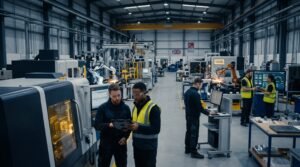
For example, a company considering expansion may need to purchase machinery, recruit staff, lease premises or invest in technology. These decisions involve financial commitments that may take years to generate a return.
If businesses face constant uncertainty about future costs, regulation or taxation, they may delay those decisions.
The government has an important role in addressing these barriers. Investment in transport, infrastructure, education and public services can support productivity and make the UK a more attractive place to do business. Equally, clear policies and a tax system that businesses can understand can help companies make informed long-term decisions.
The objective should be a business environment where investment is encouraged, productive companies can expand and new businesses have a realistic opportunity to succeed.
Image suggestion: A modern UK business facility, manufacturing operation or technology workspace, representing investment, innovation and long-term business development.
4. How Should We Judge the Success of a Budget?
A Budget should not be assessed only by the amount of revenue it raises or the immediate reaction it receives from the markets and the public.
It should also be judged by the longer-term outcomes it helps create.
Are businesses more confident about investing? Are employers able to create sustainable jobs? Is productivity improving? Are entrepreneurs finding it easier to establish and expand businesses? Are households seeing improvements in wages and living standards?
These are important questions because stronger economic performance can support public finances over time. A growing economy can generate more employment, higher business activity and a broader tax base.
Of course, growth alone does not guarantee that everyone benefits. Government policy must also consider public services, infrastructure, regional inequalities and the distribution of economic opportunities.
The real challenge is finding a balance: funding the services the country needs while maintaining an environment in which businesses and individuals can contribute to future prosperity.
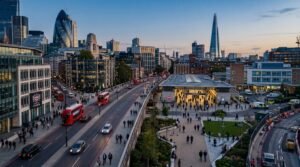
Image suggestion: A balanced visual showing a growing UK business district alongside public infrastructure, representing the relationship between private enterprise, public investment and national prosperity.
Looking Ahead: The Value of Good Financial Advice
For business owners, national economic policy may feel distant, but changes in taxation, employment costs and government spending can have a direct effect on everyday business decisions.

This is where good accounting and financial advice become particularly valuable. Understanding the tax implications of an investment, managing cash flow, reviewing business costs and planning ahead can help business owners make better-informed decisions.
At Ten Piece Limited, we believe that a successful business environment requires more than simply collecting tax. It requires businesses to have the confidence, financial understanding and support to grow sustainably.
The success of an economy should not be measured only by how much it collects. It should also be measured by how much opportunity it creates.
Britain needs a stronger economy, and that starts with creating the conditions for businesses and people to build more.